
A while ago, I started writing short blog posts that were focused on a single idea, sort of “bite-size” teaching reflections. Last night, as I set out to Marie Kondo my WordPress drafts, I encountered this one: no body, just a title.
The discovery felt strangely timely. Just yesterday morning, I had been teaching a group of students about rehearsing in writing, and here was an intent for a draft that seemed to be doing exactly that—waiting in silence, holding space for an idea I wasn’t quite ready to put into words until now.
“Today we’ll talk about talking,” I told them.
The girl with blunt eyes attempted to correct me while tilting her head, “You mean writing.”
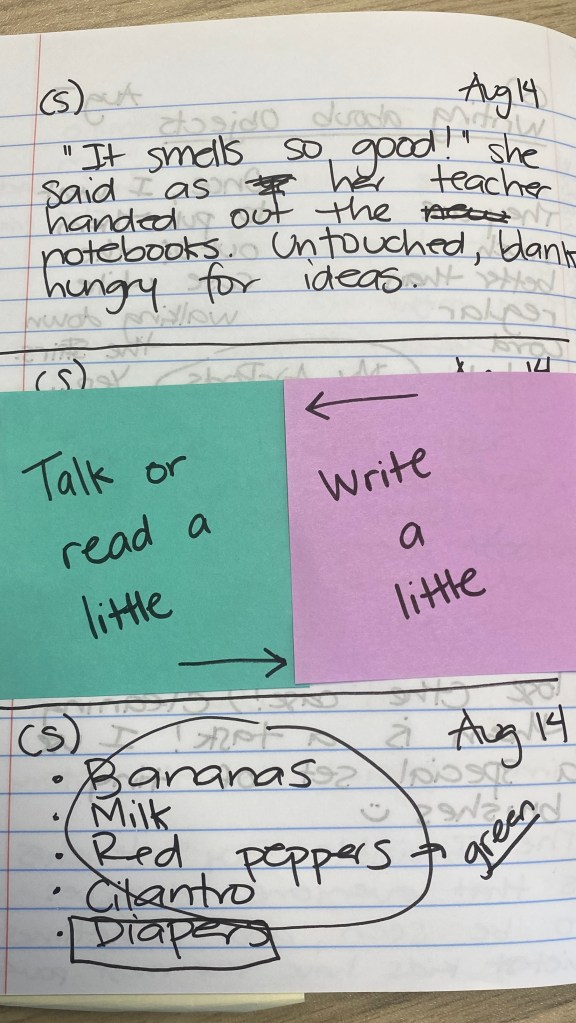
“No,” I responded. “Let me show you how I can talk about my grocery list to shape a story.”
I’ve always known how vital the rehearsal process is for a writer. Somehow, though, I rushed through it when teaching the entire writing process—making my students believe that we only rehearse when we plan. I knew better, just didn’t focus on it enough.
To me, the power of rehearsing is twofold: it opens the door to creativity while protecting the ego by acknowledging that not every word or line has to feel right. All I need to do is keep trying until it does. So, when I sat down with young writers, ready to learn about rehearsal for the first time, I reminded myself of these tips:
- Be prepared to show the process using my own writing—I can’t expect my students to become better writers without writing with/for them.
- Make the point that rehearsing and writing go hand-in-hand throughout the writing process. From the moment the hint of an idea emerges to the 3rd or 4th draft that finally feels like the one.
- Don’t start by saying “Writers rehearse,” instead start from a place of Talking the Writing and make the transformation concrete, right in front of their eyes—thinking aloud this way is powerful.
- Throw a bunch of “What if…” at an idea, and allow them to see that possibilities are essential to finding the core of a potential story.
- Visually represent the cycle between ‘talking a little’ and ‘writing a little’ to demystify the “this whole piece came out in one sitting.”
- Invite them to talk their draft aloud before writing it down. “See what you notice!”
- Allow the hums during independent writing—these are emerging signs of rehearsal.
If there’s one thing I want all writers to learn this year, it’s this: Rehearsal isn’t just preparation—it’s the heartbeat of writing.
 Start with a Story
I remember so clearly the session in your writing institute where my group covered rehearsal and I realized it lives EVERYWHERE in the writing process. I’m so glad these young writers are learning about it from you!
Loved the writer with the “blunt eyes” and the fact that you can link to your own TWT post! 🤩
LikeLike