
It’s been harder to make time to stop and reflect. Last week, however, was our last week of this incredible and challenging writing unit, and it’s worth celebrating with one final post.
Last Wednesday, we sat in a circle to end our day with a brief reflection, and, as it usually happens on soccer days, we were running out of time—whatever I asked students to share needed to be quick.
I asked, “What was something good about today?” and to my surprise, half the class said that they were happy to be done with their final drafts. I didn’t hear many of them saying the word “finished” but “done.” To me, that meant everything.
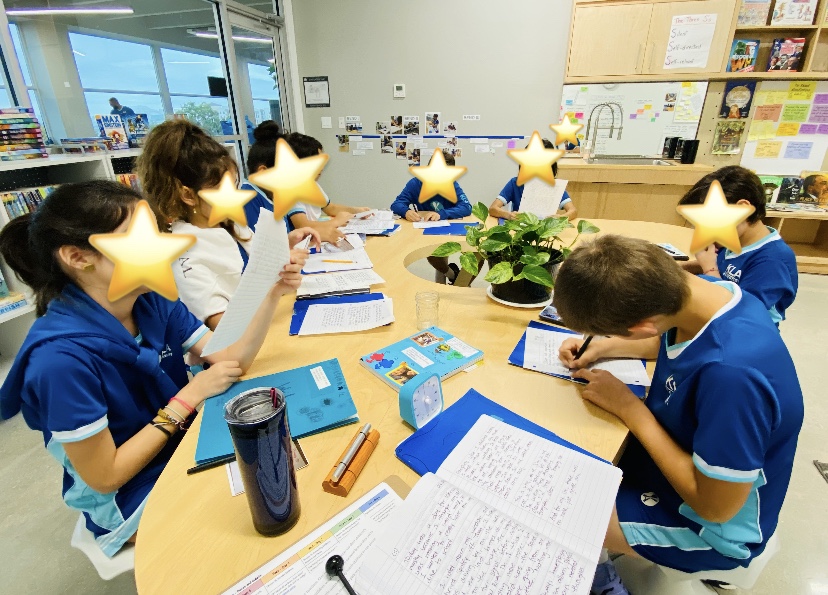
The last two weeks of “Boxes and Bullets” were filled with independence, quick coaching conferences, partnership work, checklists, and deadlines. Our unit’s third and last Bend was an invitation to put our precious first drafts aside and start a new piece, going through the writing process again, this time, in five days. When I first announced this on a Friday, I saw mouths opening slightly and eyes widening.
“But Ms. Ana! In four days? How?!”
“We worked so hard on this first draft!”
“Will we have to publish both? The second one? I like the first one better!”
I addressed all questions and eased their worries. At that moment, I knew I had to be intentional and share the goal with them. I said, “This last Bend is all about putting together everything you’ve learned from our work together and applying it without much assistance.”
These writers took it as a challenge, and they did not disappoint. My challenge was to deliver quick feedback to move them in the right direction. I spent more time meeting with those students who still needed guidance to state claims and those who were writing to teach, not to persuade. One thing I can say with pride is that, during this unit, I didn’t just confer with those struggling writers; I set a schedule for myself, and I stuck by it.
Now, I want to keep this post short, and I know I skipped a week, so now, I’ll go back to my initial goals to reflect on what mattered most to me.
Assessments: I read students’ drafts each week, and I made the time to plan small groups based on what I found. I also used the student checklist as the primary rubric to measure growth.
Self-assessment throughout the unit: that checklist became our safe harbor; we “broke it down” several times to study what each indicator should show us about our writing. I saw students setting weekly goals by circling parts of the checklist. “Today, I added transitions; I think tomorrow I might want to focus on revising my conclusion.”
Partnerships: We did not stick to original partnerships; instead, we mixed and matched based on the help we sought out. “If you need help with_____, then go ask_____ for feedback.” We became a different kind of writing community after this unit.
Audience: The focus on our audience was more explicit during the last Bend, as we revised our personal opinions to persuasive claims. Writers practiced asking themselves, “Could others disagree with this thesis?” Next time, I’ll nudge writers to think more of just one person when writing.
My learning: I wrote so much more than in previous units, and for that, I’m grateful. My writing evolved just as my students’ did. I’ll look back at these posts when planning for the Literary Essay unit to set new goals.
Next up, our celebration and the final On-Demand assessment!
 Start with a Story