
To wrap up Friday’s session, we gathered on the rug with all our materials. I ran out of time to do the Teaching Share I planned for, so instead, I invited writers to reflect with me. I sat with my notebook and folder and said, “Do you sometimes feel like you don’t know exactly what you’re writing, and then, boom! You hear something, and it just clicks?” At that moment, Leo looked directly at me and made a connection sign. That day, after two weeks and two conferences with me, he finally understood how to craft his thesis from all the stories he had written.
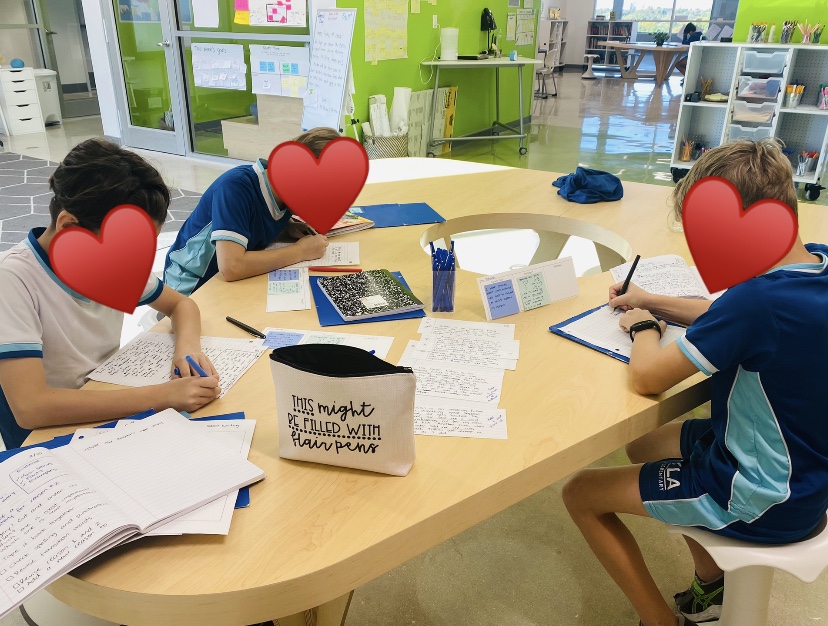

Week 3 is that sweet spot of a writing unit where most students are on a roll with their projects and lean in with each mini-lesson to see if what I’m about to teach works for them that day. It’s also the week when, as a teacher, I try to step up my conferring game to make sure I give immediate feedback to every writer. My wish is for them to efficiently use independent writing time working towards a clear goal.
One thing that helped with that was how I planned for Small Groups. Up to this point, I had only grouped struggling writers who needed immediate intervention, working with them during independent writing. Then, I’d have a “quick and easy” one-on-one conference with the rest when the week was almost over, and I always felt like I wasn’t giving them the guidance and feedback they deserved because they were doing “just fine.”
With that in mind, I decided that, for this unit, one of my learning goals would be to be more intentional with my planning and delivering of strategy groups—including all students. I turned to the experts, Jennifer Serravallo, Lucy, and her team, to gather everything they’ve written about the genre and compiled predictable scenarios, teaching points, and step-by-step strategies. I combined their valuable resources, creating an accessible tool that helped me group all students based on a common goal and plan for the strategy I’d teach them.

Having a plan for each Small Group helped with time management and autonomy. Instead of doing the demonstration myself, we spent the first three minutes studying a mentor text before trying the strategy out in their writing. The coaching I did during our work together allowed them to transfer immediately. Of all writers I met with, only two needed extra coaching later in the week. I consider that a big win for me.
Five things that made conferring a success:
- Stick to the system to read everyone’s writing
- Have more Small Groups and less One-on-one for better use of time
- Keep using coaching prompts and spend less time demonstrating
- Use a variety of mentor texts to show the strategy step by step
- Provide writers with that step-by-step visual of the strategy they just learned
This week we started with reviewing systems we’ve put in place to improve our pieces: checklists, ToDo lists, and self-assessment. It’s a revision-heavy week, and they will have new things they could work on each day. One system I want to put in place is “Ask a Writer for Advice,” where I’ll post various strengths for others to ask for feedback.
Today went well, and tonight, they’ve been tasked with doing another flash draft to continue to practice essay structure. I hope to see growth from the first week’s flash drafts with everything they’ve been learning—This will be a way for me to measure automaticity mid-unit and teaching efficacy.
 Start with a Story