
In the fall of 2019, I wrote a post about the beginning of the school year. It had been a couple of weeks, and I felt that wow-things-are-going-really-well rush. Looking back at what mattered to me two years ago, I realize that not much has changed, which makes me doubt whether something should actually be different. No change, no growth? Nah, I think it’s more like “No change, more validation.”
This new school year, for me, will feel very, very new. New school—for the most part—and a new grade level. Also, a new sense of normalcy after personal struggles that, in a way, kept me from focusing on teaching. When I think of this beginning, I think of the smell of new markers, the texture of untouched writing notebooks, and the sight of stacked books waiting to be discovered. My life is in order, so I have permission to get excited again.

During the last weeks of Summer, my thoughts begin to cling onto teaching ideas and questions. I try to keep my focus on the last few days of rest, especially being at the beach, but something inside me is hungry for these thoughts. So, I welcome them with some pens and a new notebook, jotting down ideas that are begging to set roots. These ideas though are too bouncy, so I turn to books to help me guide them. Books that help me make sense of the start of a new school year.
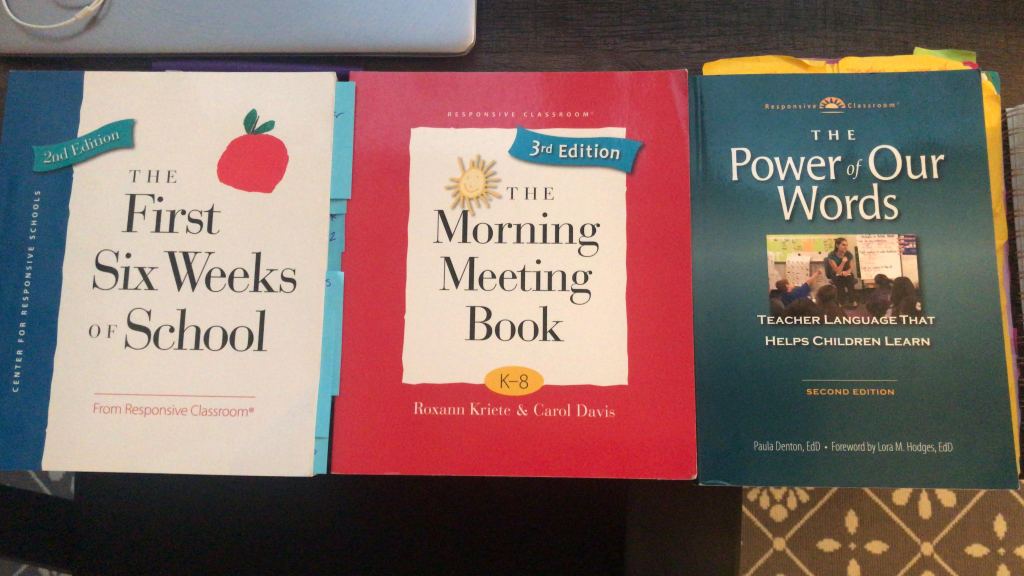
Since 2019, I turn to Responsive Classrooms to guide me as I build a learning community from day one, here are my thoughts on the two books I go to first:
All teachers know how essential strong routines are to the success of all students. These routines will vary depending on the grade level, but without a doubt, students need help understanding what we expect of them and why. What I’ve learned about routines is that they need to be clear, direct, and consistent.
Before that first day of school, I plan with this book on my lap. I use the suggestions for Morning Meetings, transitions between different periods of the day, and activities to build community. My schedules don’t always match the examples given here, but I focus on the critical moments of the day where I can teach the routines I plan on keeping all year long.
When I asked my coworker Noah to recommend one book to start my Responsive Classrooms journey, he enthusiastically suggested this title. I hate to admit that I waited a long time before reading it because I wanted something practical; I wrongly assumed this book wasn’t it, and I regret not reading it sooner.
Now that I have read it, filling each page with questions and goals, I understand why Noah told me about this book before any other. The way we speak to children matters because we talk to them all day long. You don’t need to be a Responsive Classrooms school, hold Morning Meetings, or do any of the other components, and yet, your words will have an impact on your students and yourself.
This book has taught me a lot about myself and has given me a new perspective on how to communicate with children. There are so many things I learned from this book, too many to include here. Maybe I’ll come back in a few weeks and dedicate a post just to that.
Another book I go back to is the Morning Meetings book. Morning Meetings are often the opening door to Responsive Classrooms, or at least, the one thing teachers feel encouraged to do to bring a positive vibe to their learning communities. These meetings happen daily, throughout the entire year, so running out of ideas is unavoidable. Having this book on my shelf has saved me on numerous occasions.
Now, one can do all the reading and take notes on the wonderful things we intend to do with those new students in August, but what I’ve learned is that often, books push me towards bold and huge goals. I get way too excited and unrealistic; this is when I try to write to clean up a bit. Three questions help me anchor my thinking:
- Of all the routines and rituals I plan on having in my classroom, which ones are the most important to teach those first few weeks?
- Knowing that community-building matters more than learning any academic concept, how will I blend both?
- How will I set up the environment to help students feel welcome and, at the same time, give them a voice in designing their learning spaces?
Every year, we get ready to meet a new group of students, which is a reason to reflect on what matters most. In my case, I’ll have to throw the “Ana, how about teaching fourth grade?” layer in the mix, which means also reading some pages of the book Yardsticks.
Reflecting on that post from 2019, I realize that I’m the same teacher I was when I wrote those words. When I welcome my new students on August 23rd, I’ll be ready to build strong relationships that will be the base for all the work we’ll do throughout the year.
 Start with a Story
Thank you for the recomm… I got all of them and MUST SAY…Every single teacher in the world should read “The Power of our Words” book. You are the BEST!
LikeLike
Amazing as usual mi reina. Me encantaría poder ser una alumna tuya vale 🙂
I love your passion and enthusiasm towards teaching 🙂
LikeLike