
Can your hand catch up with your thoughts?
Drafting could easily be what young writers enjoy the most. The moment all their ideas pour onto a piece of paper like spilled paint, unstoppable. Or at least, that’s how most of them feel when the idea is right. When they’ve captured that idea that excites them; they can’t wait to write it all and share it with someone else.
When we draft, we have no limitations. We don’t erase, we don’t think much, we just try to keep up with the words and sentences our mind throws at us. Drafting leaves us with sore hands and shoulders because we dive into our stories so deeply, our muscles need to hold on tight to keep our bodies from floating away.
As a writing teacher, that’s how I want my writers to feel when they’re drafting. In Kindergarten, I want them to write story after story, page after page, sentence after sentence. When young writers draft, they don’t think about changes, they just want to tell their story the way they hear it in their heads. They’ve rehearsed each part and they now want to connect all the words that’ll make it come alive.

In lower elementary, teachers need only to protect that writing time for students to draft freely. We know that writers learn to write by writing; drafting requires time. Students need time to feel confident and get going, time to rehearse sentences after an initial page, time to close the loop and see the story materialize. While they draft, we hold conferences using open-ended questions to help them think of possibilities prior to the revision process. We offer time and encouragement to help them reach the goal of finishing that story and celebrating such effort.
Drafting in upper elementary is more dense because these writers feel the weight of expectations increasing. The expectations on the quality of their writing goes up each time we teach them strategies to elaborate and bring out a new voice. It takes them a couple of days, sometimes more, to draft one story, and in most cases, they’ll feel tempted to begin revising before they’ve written an ending. For some stories, writers will feel like words flow like a river, while other stories will feel more like building a house brick by brick. That awkwardness comes from not knowing quite yet what their story is about, and we let them know that’s normal.
We teach these writers that some stories don’t know what they are until they’ve been written from beginning to end. We let them in on the magic that will happen once they start revising and pulling that story apart, rereading and deciding what goes and what stays. Revision, however, can’t happen on empty lines. Revision requires a mess of ideas transcribed on paper by the writer.
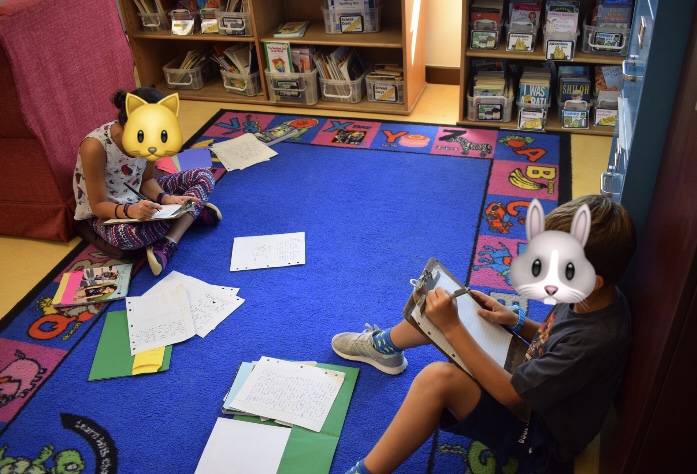
Before third grade, writers draft from a place of confidence. They’re like superheroes writing incredible stories that feel like gold. Starting in third grade, they’ll begin to draft from a place of self-awareness, opening a door for the discovery that’ll take place once their story has ultimately come out. Drafting then becomes a more scary and intimidating task, requiring students to take risks and embrace the messiness that comes with first drafts.
Do you see where I’m going with this? I believe you do. Writers need writing teachers who also embrace that awkwardness of drafting without stopping and going back, looking for some sort of approval by rereading lines and waiting for a mystical nod. Drafting like no one’s reading, sort of the way I tried to draft this post by turning off the spell-check and forcing my fingers to stay on the keyboard.
Can my fingers catch up with the ideas as they come together?
Can I finish this post without giving my ego permission to back up and fix stuff?
That, to me, is what drafting is all about.
 Start with a Story