
At 35 years old, I read the first Harry Potter book. Some would say it took me too long; others would say it’s never too late to catch up with the famous young wizard. I’d say, “It wasn’t as annoying as I thought it’d be.” This post isn’t about what motivated me to start reading these books or the irony of a 14-year-old Ana falling asleep in the movie theater when her friends took her to watch the first movie. This is about becoming a reader in my thirties. Also, how to avoid such delay in new generations.
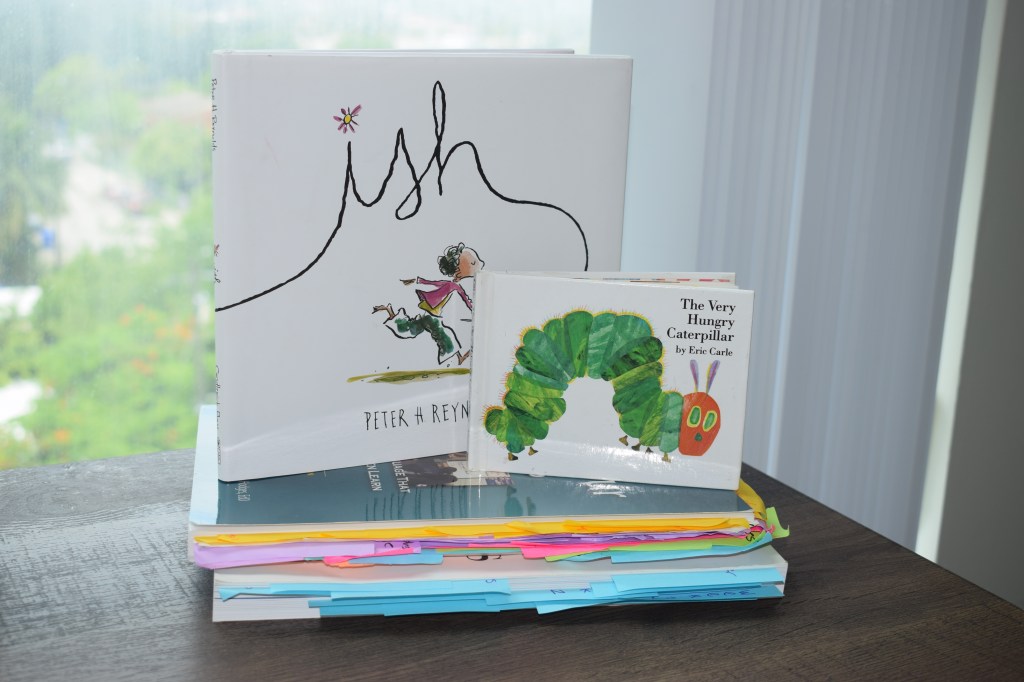
I did not grow up loving books. I became interested in fiction stories when I read García Marquez’s Chronicles of a Death Foretold in the 8th grade. I vividly remember reading the first page and picturing Santiago Nasar waking up from that dream about trees. Never before had I seen characters in my mind as I read. I have zero recollection of reading any other kind of story before that book. I didn’t grow up loving books because I didn’t know what I was missing.
The only role books played was to introduce me to facts. Reading textbooks was torture; my eyes had to go back and forth each sentence for my brain to capture any sort of information. Studying and memorizing stuff for tests was incredibly hard because I did not know how to read nonfiction. My mom read aloud to me and helped me summarize facts when I was running out of time for a test. She was a single mom, working, studying, and raising my siblings and me. She did the best she could.
I want to believe, though, that things could have been different if I had learned to read nonfiction at school. I want to believe that if a teacher had taken the time to introduce me to the universe of fiction, I could have grown up reading for pleasure, devouring one novel after the other. Sadly, that didn’t happen, so I had to teach myself.
Today, I fill my nonfiction books with post-its and enjoy various fiction titles on kindle or audiobooks. It took me thirty-something years to feel like a reader. That’s way too long for a girl to see herself as a reader.
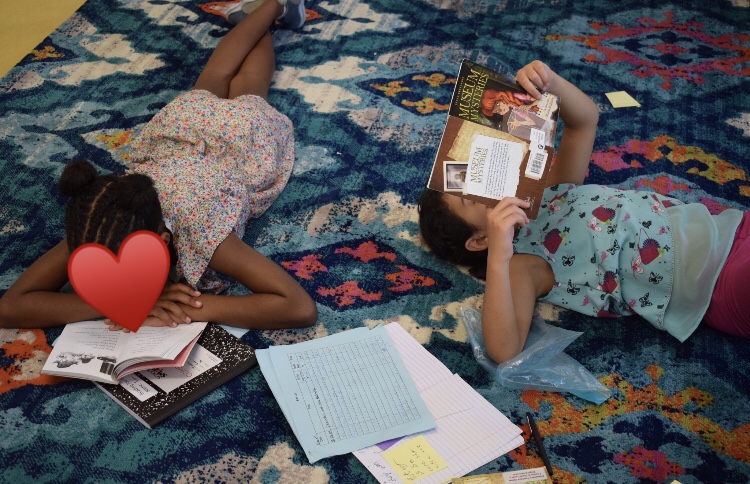
Because I’ve taught Kindergarten, I know what makes a reader fall in love with books. I’ve seen children mesmerized by books before they even speak. I also know what keeps a third-grader from wandering in the library. We, teachers, have a huge role in developing readers, just as much as parents do.
Now, I don’t have children of my own, but I have had parents ask for advice on how to support their children’s reading at home. Sometimes these questions come when their child is starting to read, and they get that thrill. Other times, they see time going by and the issues becoming more apparent. I’ve had students who love reading and struggle; I’ve also had students whose only obstacle is that of wanting to rea
The desire of wanting to read matters. And so, to those parents who ask me what they can do at home, I say this:
- Be a partner to your child’s teacher. Talk to them, trust them, ask all the questions, be consistent.
- “Monkey see, monkey do.” Everything adults do, children imitate. That’s why they are drawn to cell phones. If you want your child to enjoy reading often, they need to see you do the same.
Now, you may be the same reader I was a few years ago, so the act of reading may feel foreign to you. If that’s the case, make it a goal to start reading with your child daily.
I honestly believe that every person in this world has a book destined to make them love the printed word; some have made that discovery, some never will because they gave up or never tried. Choose which one you could be.
- Change the “academic” mindset attached to reading. Reading isn’t something that happens only at school. Reading is something that goes beyond the walls of the classroom. A child who grows up being read to and surrounded by books will most likely be a reader who finds joy in reading. Do you have books at home?
- Help your child explore a variety of books by visiting libraries and exploring books in different genres. Children of all ages need to be read to just as much as they need to read themselves. Find a balance between the bedtime books you read to your kid and the books they read when they’re alone.
Your child needs to have enough books to feed their curiosity. Teachers will tell you that readers need loads of books at their disposal for high stamina and volume. Find a way to make books available to your child; ask friends to borrow a couple, check out the school’s library, or ask other parents from the class if you could join a book exchange.

- Help your child see books as a resource. If they have a question that you know or don’t know the answer to, look it up and show them how we can read to learn things, even if you do so by searching on the internet. Offer nonfiction texts that match your child’s interests and suggest you read them together.
- Make their reading development visible by creating a display of the titles they read and the ones you read together. Have a conversation about the books that were hard to read and the ones that felt easier—kind of like having a growth chart where you mark your child’s height. Imagine a “chart” where you see the growth in complexity within a school year.
- Understand the purpose of children’s books. Activity books that are filled with worksheets aren’t books for them to learn how to read. We read with our eyes, hearts, and minds. If you want your child to do extra “homework” by tracing a bunch of lines and copying letters and numbers, then go for those activity books.
- Help your child see books as an option for when they’re bored. Your child might have race cars, blocks, dolls, puzzles, or tablets to entertain themselves. Books should be part of that list. I added tablets because we can’t kid ourselves; these days, most kids have them. How much time does your child spend watching videos? Imagine a book in their hands instead. Believe me, kids who discover the love for reading get lost in books just as much as they get lost in the dark hole of online videos.
The point is, your child doesn’t need to wait until they’re 35 to discover the bliss of reading. They can hopefully avoid unnecessary struggles because they aren’t confident in their reading abilities. Can you think of a negative consequence to helping your child become a reader today? Yeah, me neither.
It doesn’t matter how old they are; today is a good day to start.
 Start with a Story