
The vast room welcomed me. I can still smell the popcorn and hear the soft music. Teachers, in their Eagle Tuesday outfits, gathered in small groups. Some went straight to their preferred table, and others stood by the coffee and tea, waiting to pour some that would give them that last bit of energy to make it ‘till 5 pm.
I remember walking in and seeing pens and paper on each table and thinking, “This won’t be a simple lecture.” I was excited, though, because earlier that week, my mind had been blown away by things I learned from Christy, and today, she would talk to us about Writing Workshop as a faculty. I carefully chose a table and sat down with my water bottle, notebook, and floating expectations.
Little did I know, Christy would make us all write and share our writing that afternoon. Yikes. I had never written narratives in public. I had never written something personal for my colleagues to read. This was back in 2014 when the only way I’d write personal narratives was away in some hidden blog. But Christy said something that I’ll never forget, which inspired me to want to be a writing teacher who actually writes.
“When children take swimming lessons, they’re in the pool, and the swim instructor isn’t outside, telling them what to do. They get in the pool and show them how!”
I knew it then; I had to get in the pool and learn how to be a writer. If I wanted to be someone who could teach young writers, I had to write. And in that vast room, where collective vulnerability filled the space, I learned about the writing process for primary (K-2) and upper elementary (3-5).
The first thing I learned about the writing process was how it’s directly connected to the way writers develop. For that reason, the process for kindergarten through second grade looks very different from the one for third, fourth, and fifth graders. I’ll do my best to share what I’ve learned about both.
Immersion and Generating Ideas

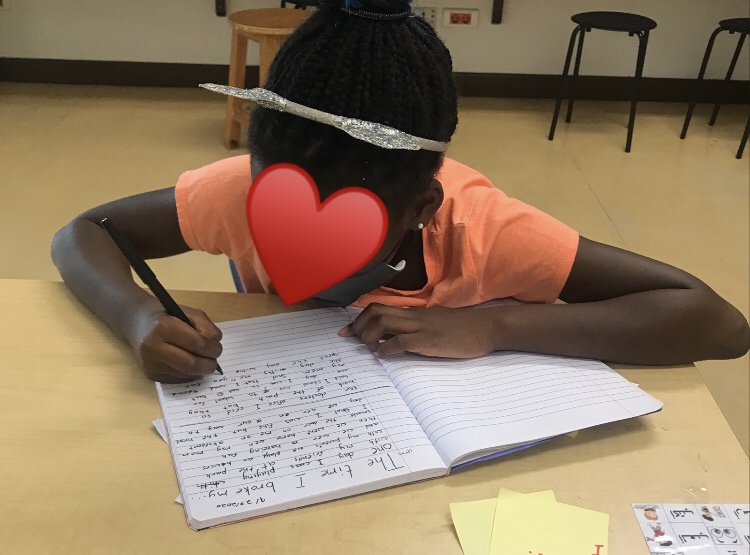
Writing must start somewhere and for many writers, coming up with ideas presents itself as the first monster before we even put pen to paper. “I don’t know what to write about!” is the most common thing we hear writers of all ages say when we start a unit. At times, “I don’t have any ideas!” will beat it, though.
With K-2 writers, we begin by teaching strategies to gather ideas from our daily lives. Everything we do, see, hear, and experience can hold a hidden story. We can find ideas in the walk we take with our grandma or the birthday party we attended on Sunday. There’s an idea in the mudpie Finn makes at recess and how Chelsea jumps off the swing. Even the mundane drive to school can carry a bunch of ideas to write stories. Everything can be a story.
In upper elementary, before they begin collecting ideas, we immerse them in the genre of the unit we’re about to start. We intentionally select a few picture books that can serve as mentor texts throughout the unit and read them for that purpose. A Writer’s Notebook by Ralph Fletcher, Kitchen Dance by Maurie Manning, Ralph Tells a Story by Abby Hanlon, The Best Story by Eileen Spinelli are some of my favorites for launching units.
In my experience, the two days we spend immersing ourselves in a genre are all about understanding the purpose of the written word. We study moves the author makes; we wonder why they choose to describe the setting in a certain way, how they lead with dialogue, or how they use figurative language to express feelings.
These mentor texts and moves we begin exploring are fundamental for the work we’ll do in the next five weeks. My hope always is to connect students to strategies authors used to convey a message. Then, we display the books in our writing center for writers to borrow whenever they need help from an expert.
We’ll also use mentor texts with K-2 writers, picking from your favorite read-alouds, but it’s not necessary to spend a day or two studying the genre before jumping in. In my experience, using my writing as a mentor text works wonders when working with young writers. In upper grades, I’ll also use my samples along with read-alouds.
Young writers, especially in kindergarten, will write a new piece almost every day. Up to second grade, we are focusing on stamina and volume. Lots and lots of volume. For that reason, we make sure writers experiment with a variety of idea-generating strategies. They think of an idea and grab a booklet right away to compose that story. The next day, they’ll do it again. Some second-graders may be ready to hold on to their drafts for a few more days as they learn more elaborate revision strategies.
In upper grades, we’ll spend two to three days collecting seed ideas in our precious writer’s notebook. Calling them seed ideas serves the purpose of helping writers understand that what we’re jotting down are quick moments or events that may become something else.
Something that happens often is that writers, especially third-graders, begin drafting inside the notebook. Starting a draft on paper after thinking of an idea is what they’re used to, so slowing down to focus only on seed ideas in a notebook can be new and challenging for them. When I see this, I reteach the notebook’s purpose and how seed ideas are different from drafts.
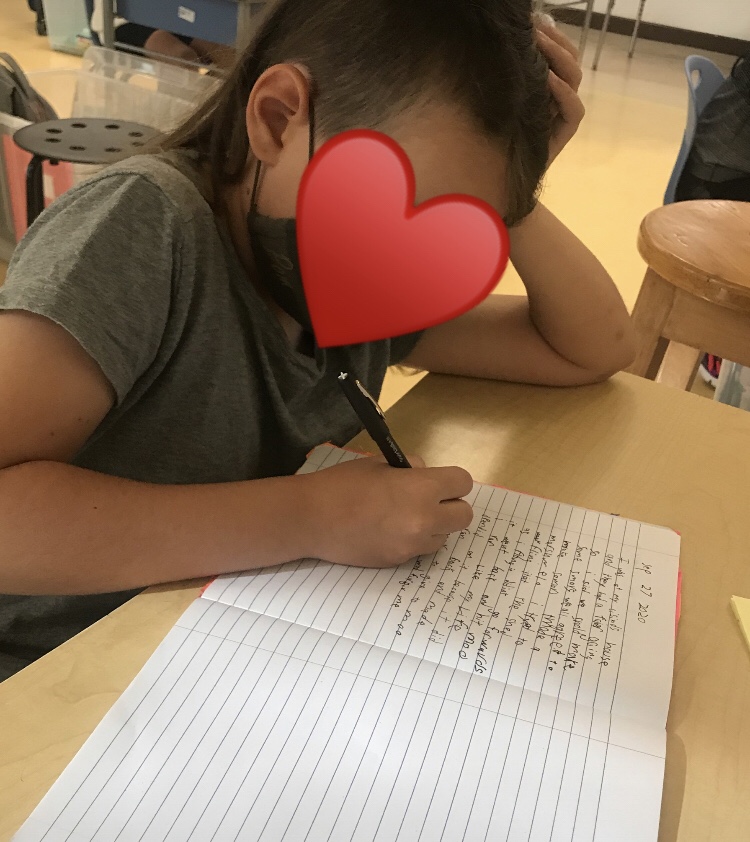
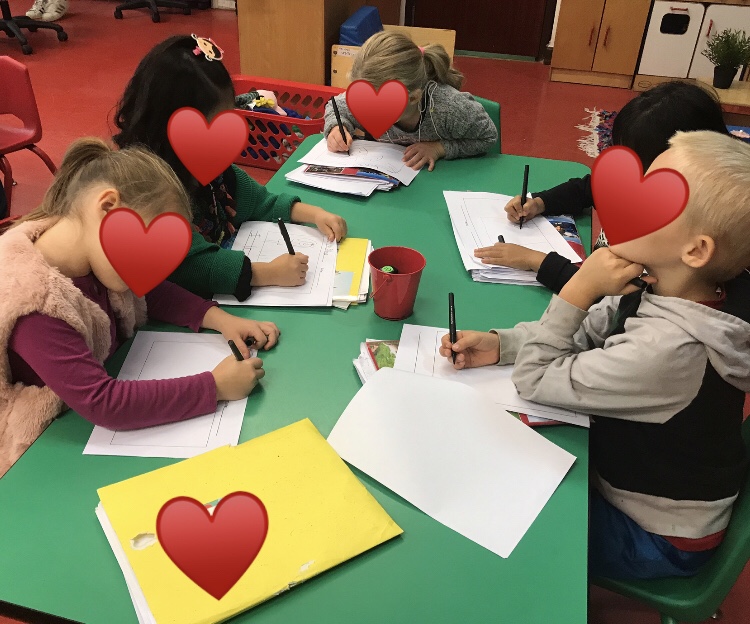
Seed ideas are possibilities. Some might be published, some might stay in there for a while, what matters is to have as many as we can so that, when we’re learning strategies to choose and develop such ideas, we can choose from a bunch. By making a habit of collecting seed ideas, we start seeing more and more stories in our daily lives. The fear of not having a worthy idea becomes less recurrent.
Third-graders are the first ones who receive a writer’s notebook. Up to second grade, writers keep their work in a writing folder. I make a big deal of the notebook in third grade to help writers bond with it, the same way we celebrate writing folders in K-2. We decorate it, add favorite authors’ quotes, come up with titles for them, and find a special place in our classroom to keep them safe. I also encourage them to take it home every night because we never know when we’ll stumble upon a seed idea!
The most crucial thing about generating/collecting ideas is that we provide our writers with plenty of strategies to set them up for success as they start every new unit. I also wish for them to honor ideas whenever in the process they show up. If a writer comes to me while we’re all editing saying they have to write something that happened, I let them!
In that room, where I wrote as I had never done before, I realized that having ideas to write about isn’t easy; I never learned how to come up with them! So as a teacher, I treasure these first stages of the writing process because they’re vital to the success of all students. Having provoking ideas they truly want to bring to publication will support engagement and confidence.
Up next, choosing and developing a seed idea (grades 3-5), planning, and getting the importance of oral rehearsal for storytelling.
 Start with a Story