
I began learning about the art of teaching by watching others teach. When I started working as an assistant in a classroom, I was starting at university. A lot of theory, not much practice. So having this first job was the perfect dive into teaching.
I was an assistant for four years. In those four years, I watched closely as the teachers I assisted led whole-class lessons, taught reading using big books, planned crafty activities to teach “the letter of the week,” and used worksheets to teach various concepts and skills. Things I also did when I became a classroom teacher. This was until I graduated and began my master’s degree. I decided to join Twitter to research and there, I discovered a world of new learning at the tip of my fingers.
Since then, I am no longer just a teacher; I am also a learner. With each new job, new colleagues, and new mentors, I have learned new approaches to improve the way I understand student learning. Conferring being one of the most powerful. So when I was asked to coach teaching assistants in how to confer with young writers, I was humbled to share the joy. That’s what inspired me to write this post.
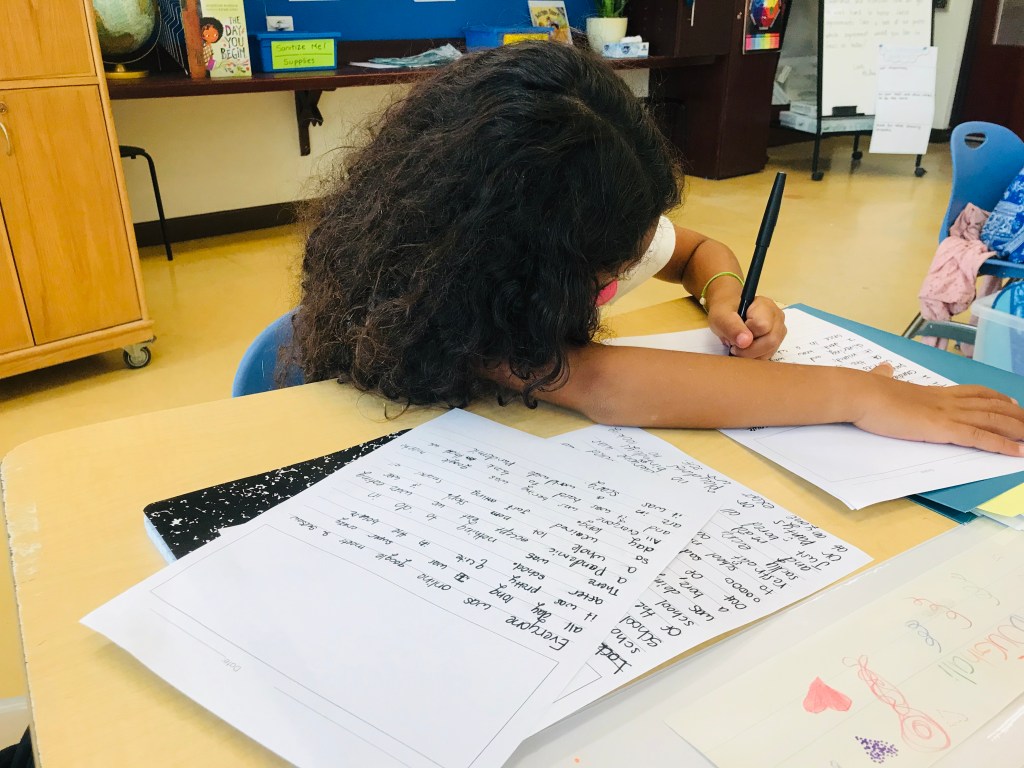
All students are doing something worth celebrating. That is the first thing I make sure to let teachers know. Writing is difficult for children and adults. This makes for an intimidating moment when teachers expect children to do something they sometimes are not sure how to do. This is why, when we confer with them, one-on-one, we celebrate approximations and cater to the needs of that specific writer.
We research, asking them what they are working on, and teaching them to talk about their writing skills instead of what they’re writing. This starts as early as Kindergarten when students are eager to share their books about visiting their cousins or going to finish. We teach them how to answer the question, “What are you doing as a writer?” to support the idea of learning how to be a better writer instead of writing better stories.
Later on, in Grades 3-5, we also ask, “What are your goals for today? What do you want to do, and how are you planning on doing this?” From Kindergarten to Grade 5, these questions encourage writers to reflect on their abilities and see writing as infinite possibilities, moving past the concern of whether their topics are good or not.
After researching what the writer is doing, I quickly identify one thing to teach and one thing to compliment. We usually find many things we wish the writer did better so it’s important we remember it should be only one. There will be other opportunities to teach the rest and, ou goal in this conference, is to leave the writer feeling better about themselves and with an achievable goal, instead of overwhelmed with a bunch of things they’re “doing wrong.”
Relationships matter, so we compliment first. I learned from Christy to ask, “Can I give you a compliment?” before doing so. It’s such a simple way to celebrate the writer for something they might not even know they’re doing. I have also learned that by starting with those questions, I establish a connection with the students, letting them know I am here to support, not judge.
There also will be times when students aren’t happy with my sudden presence, and most times, I’ll leave that writer by saying, “I’ll see you tomorrow, no worries.” The thing about conferences is that all writers should expect me to visit them at least once a week. We spend weeks at the beginning of the school year understanding the purpose of conferences and the roles of all those involved; high expectations and safety nets.
After I compliment them, I set my intention for the conference. “I noticed you are ready to learn something new,” or “I want to teach you something that will help you improve…” Students deserve to know why I’m taking them away from their independent writing time. This also conveys the message of, “You’re on the right track, and there’s always something new we can learn to get better at this.”
The teaching that follows the compliment is always specific, clear, and visual. I have spent years working on refining the teaching points I use with students during conferences. Time is a valuable resource, and my goal is to release that writer as soon as I can to get more independent practice. I have also learned that if I’m not sure what to teach at that moment, I should walk away after giving a compliment. When this happens, I study that student’s writing during a recess or after school to make some decisions for my next conference—no shame in walking away.
After a short and clear teaching point, I demonstrate the strategy in my own writing. I verbalize my thinking as I model what I expect the writer to do. At this point, I’m halfway through my conference, so I have to make sure I don’t spend too long demonstrating but that the goal is clear. “Now you try it,” is the cue for the student to transfer what I just taught—a lot of coaching and celebrating approximations during this part.
As soon as the writer does what I taught, I celebrate and transition back to independent writing. This is mostly known as “the link,” and it’s letting the student know the purpose of the strategy they just learned and why they should try it every time they write, not just in this piece. Depending on the students’ age, I leave them with a “literary gift” or a strategy card on a post-it. A visual of the work we did to keep in their writer’s folders or their notebooks. In Kindergarten, I’d make pictures with keywords and, in Grade 3, more elaborate teaching points.

I have witnessed the benefits of conferring with writers this way. My goal is always to leave the writer feeling empowered and confident. I can even see it in the way they readjust their seats and strengthen their backs. A strong conference can also support writers who may be stuck, have low stamina, or have hit a wall. This is also something I look out for. I can be incredibly prepared for a conference, but if I sit and the writer shows signs of fatigue, I know it’s time to compliment and walk away.
Conferring with students is one of the most precious moments of my day in a classroom; working with teachers on improving their conferring skills is beyond special. To wrap this up, here are some of the “don’t forget” ideas that I have added to my list after years of conferring and working with other teachers:
- Researching the writer means asking the right questions. This is the time to decide what to teach!
- Remember to keep the conferences short; stop the writer if they start going on and on about their piece.
- To support independence, never begin conferring until students learn what it means to work independently. If my conferences get interrupted by struggling students, I know it’s time to back up and have a chat.
- Routines and rituals must be solid before conferring.
- Students have roles during a conference. Before I begin conferring, we learn about the roles of the teacher, student, and peers. Everyone has a job to do, no interruptions!
- Keep the conferences short. I always aim for 7 minutes or less. I use a timer to keep me in check. Writers need time to practice without a teacher next to them!
- First, confer with writers who are engaged. We tend to go to the disengaged writer first because we want them to work. Hold your horses; give them a chance to make a choice for themselves. Trust them!
- As Christy says, always work on building confidence before moving on to building a craft.
- Be prepared to confer. Have mentor texts, know your writers, have an idea of the questions you’ll ask, time yourself.
- Don’t over-confer. The goal is to see each writer once a week unless you notice a significant amount of struggle. If you need to confer more than once a week, keep them even shorter. Writers learn how to write with confidence by writing independently.
- Understand the progression of young writers. Meet each writer where they are, give them what they need to approach the next level. Teach something they are about to do but don’t know yet. Too challenging becomes unreachable and scary.
- Learn how to study student’s writing to know what they need in their craft. Our eyes go straight to punctuation and spelling. What’s your goal for the writer? Let them have a say in it!
- Use what you learn from writers during conferences to highlight them in your mid-workshop interruptions or teaching shares. We all like a little praise.
Conferring is an art that takes lots and lots of practice. Be kind to yourself and your writers. Let them know you trust them!
 Start with a Story