
The beginning of the school year offers many opportunities for building solid relationships with students. For that reason, I love planning for first morning meetings, writing and reading workshops, and fun community-building activities. I want my students to know that I really want to know who they are, what they like and don’t like, who their favorite people are, what they do after school and on the weekend, and what they hope to do in our class. So after a couple of weeks of school, here are a few thoughts on how things are going for us.
Creating a positive and safe classroom environment
I became interested in Responsive Classrooms last school year and the philosophy behind morning meetings and classroom management structures. After getting myself trained this Summer, I consolidated my beliefs about child development, and I also learned the importance in welcoming students’ voices when creating the environment in which we would all coexist for several months. On the first day of school, there were no preset classroom rules or expectations, those we have been generating together because what they have to say matters. First, everyone got to share their “hopes and dreams” for this year, and in the last two days, we’ve had conversations about what we all need to do in order to achieve those. This is where our classroom agreements or rules will come from. Here is a visual of how their conversations went:

Knowing who they are before I teach them something new
On that note, one of many reasons to love The Teachers College Reading and Writing Workshop is that they believe that first and foremost, teachers should learn about students experiences with reading and writing, before teaching the actual curriculum. Do students see themselves as readers and writers? What do they enjoy/hate about literacy? What would they like to read or write about?
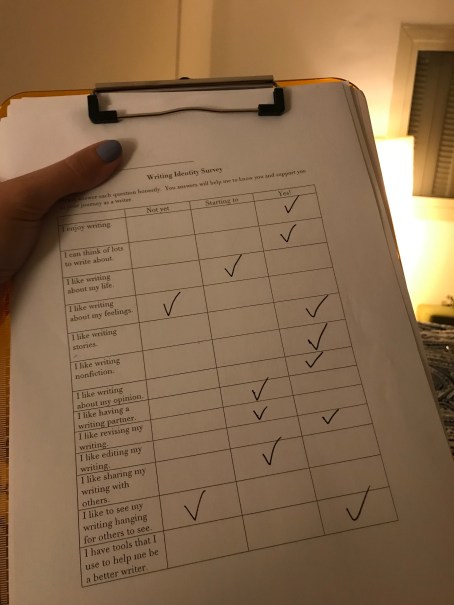
Starting off with opportunities to gather all that information is key, just as important as routines or rituals. The wise Christy Curran once told me ”confidence before craft” when describing what the first weeks of the workshop in the classroom should be about. Writing identity surveys, creating our notebooks, creating a reading and writing community in our room… all of that must in order to let our students know that we believe in them and their ability to do the work we’ll expect of them. I got such valuable information just by reading the surveys they filled out:
Building relationships is the first goal
My friend and colleague Noah introduced me to one of the easiest yet powerful strategies I’ve learned to build relationships with students and families is to send weekly notes to each child about something I noticed they did. The idea is that students feel seen and valued in our class. It matters that I take time out of my very busy day to write a positive note to each student each week. I did so in Kindergarten for 2 years and the results were so gratifying, for all involved. This year, I’ve been doing the same thing in Grade 3 and the reactions have been priceless. At first, some students seemed confused by the handwritten post-it on their desks and asked why I had given it to them. Later on, I started receiving notes from them in response to what I had written. Such powerful connections!
Often, parents show me how these notes are treasured at home:


The beginning of this school year has been challenging, I’ve worked harder than many years before and teaching a new grade level has me on my toes consistently, but if there’s one thing I can already say is that I feel like I’m learning something new every day, and I am loving it.
 Start with a Story
Will definitely try the notes! You inspire me, Missana! Te quiero más que a un camión de tequeños… de Chop’s!!!!
LikeLike
Wow, Ana…great to read about your thinking and enthusiasm. I feel so blessed to be working with you and hope I can add to and grow with your journey!
LikeLike
Thank you!
LikeLike
This is such a great article!
LikeLike